







Search Results for: Educational Requirement

HEYTEA's barista job posting requiring a bachelor's degree sparks debate; store responds that promotions are not based solely on academic qualifications.
Recently, Heytea publicly recruited tea preparers at a job fair in Guangzhou, and the education requirement column conspicuously stated "bachelor's degree," sparking widespread discussion on social media platforms. An applicant revealed that the requirement was initially "associate degree," but was later changed to "bachelor's degree" with a sticker. Many netizens questioned: does shaking milk tea require a bachelor's degree? In response, a Heytea store stated that the tea preparer position places more emphasis on individual ability, education is not a hard threshold, and promotions are not based on education. After the incident gained traction, the education requirement on the recruitment notice was changed back to "no requirement." This recruitment controversy reflects the sensitive topic of the match between education and job positions in the current job market, and also prompts people to reconsider: where exactly is the professional threshold behind a cup of milk tea? [more…]
COE Launches Origins Immersive Program: First Stop in El Salvador for an In-Depth Experience of the Entire Coffee Supply Chain
The Cup of Excellence (COE) organization recently launched a multi-day educational program aimed at giving international coffee professionals an in-depth, immersive experience of coffee-producing countries' local coffee and culture. For its first collaboration with the Salvadoran Coffee Institute, the inaugural "Origin Immersion" program is set to take place in El Salvador in February 2024. The five-day course covers COE cupping scoring, industry history and variety presentations, visits to farms, processing plants, and roasters, defect identification and quality control, discussions on sustainable practices and biodiversity, as well as hands-on roasting and espresso tasting sessions. COE founder Susie Spindler and Salvadoran Coffee Institute director Carolina Padilla both have high hopes for the program, looking to bring buyers and producers closer together and raise the international profile of Salvadoran coffee. [more…]

Shanghai Auntie Sparks Heated Debate with Uterus-Shaped Plush Toy—Why Wellness Milk Tea Merch Makes People Uncomfortable
Auntea Jenny has recently continued to push forward in the "wellness milk tea" segment, launching the "Five Red Vitality Slow Nourishment Bottle" and a matching peripheral package. Consumers who purchase the designated package can receive a "Little Palace Tribute Plush Doll" for free. However, after the new product launched, what sparked discussion was not the tea drink itself, but this giveaway doll shaped like a uterus—it is inverted pear-shaped, with details such as "fallopian tubes" and "ovaries," and comes in two color schemes representing different physiological cycles. Some netizens said bluntly that it caused "physiological discomfort," believing that pairing a human organ doll with a tea-drinking scenario was too bizarre. Supporters, however, felt that for a wellness drink aimed at female consumers, a uterus doll was understandable and also had a fun educational aspect. As the incident gained traction, Auntea Jenny responded that the move was intended to convey the ideas of pleasing oneself, confidence, and freedom, and that the doll has not been taken off the shelves. [more…]
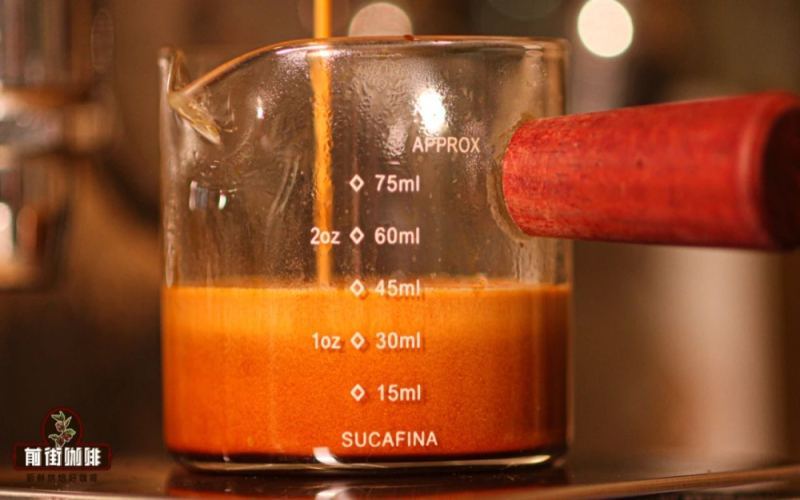
A Guide to Espresso Extraction Time and Pressure Adjustment: Complete Parameter Settings from Dose and Ratio to Flow Rate
Espresso extraction has never been something that can be solved with a fixed formula. The freshness of the coffee beans, the grind size, the brand and model of the espresso machine, the extraction pressure, and the stability of the water temperature—every one of these variables will cause the final cup's flavor to deviate. Precisely for this reason, in its educational articles Front Street Coffee rarely gives an exact extraction time figure the way it does for pour-over. This article will start from the dimensions of dose, coffee-to-water ratio, extraction time, flow rate, pressure, and water temperature, systematically sorting out how to customize a suitable espresso extraction plan for the blend in your hands, and will also introduce the methods for measuring and calculating espresso concentration and extraction yield, helping you find your own cup of good coffee within the Golden Cup reference range. [more…]

Shanghai Consumer Council Once Again Calls Out Trendy Tea Drinks: Mango Yogurt Smoothie Ingredients of More Yogurt Under Scrutiny
Following the case of Shuyi Burning Grass Jelly, the Shanghai Consumer Council on March 13 once again turned its attention to the internet-famous tea beverage brand More Yogurt, focusing on the ingredient composition of its "Mango Yogurt Smoothie." Testing by the Consumer Council found that the drink contained only a small amount of yogurt yet had unusually high fat content, and despite being labeled as having no added sugar, sucrose and maltose were still detected. The Consumer Council questioned the source of this excess fat and sugar and demanded that More Yogurt explain to consumers "what was added." The incident quickly sparked widespread discussion and trended on Weibo. This article sorts through the testing data and science popularization information released by the Consumer Council to present the full picture of the incident. For readers interested in coffee and beverage industry trends, Front Street Coffee also continues to follow such food safety topics and advocates transparent consumption. [more…]

How Long Should Pour-Over Coffee Extraction Take? Is Two Minutes a Hard Requirement? An Analysis of Factors Affecting Brewing Time
How long exactly should the extraction time for pour-over coffee be controlled? Is two minutes truly an unshakable standard? Starting from the relationship between extraction yield and time, this article explains why Front Street recommends 2 minutes ±10 seconds as a reference range, and clarifies the logic behind how this time matches Front Street's current brewing framework. At the same time, the article will sort out which variables directly change the speed at which water passes through the coffee bed during the entire pour-over process, among which grind size is one of the most critical influencing factors. Only by understanding the parameter interactions behind time can you more accurately judge the source of flavor deviations and make effective adjustments. [more…]

Front Street Coffee Complete Knowledge Collection: A Coffee Learning Guide and Practical Manual from Beginner to Advanced
The Front Street official account has insisted on daily updates for many years, accumulating a massive amount of educational content covering every area of coffee. From the origins of coffee beans to the birth of a finished cup of coffee, from basic terminology to advanced brewing techniques, the articles have touched on virtually every question a coffee lover might encounter. This article reorganizes that content along a learning path, dividing it into sections such as must-reads for beginners, tasting methods, brewing techniques, advanced improvement, and Front Street's random musings on industry topics, making it easy for readers to quickly locate the knowledge they need based on their own stage, and also convenient for systematically filling in gaps. Whether you are a novice just getting into coffee or an advanced player hoping to hone your skills, you can find corresponding content here. [more…]
Ethiopian Natural Sidamo Coffee Beans: Flavor Characteristics, Origin Background, and Processing Method Analysis
Sidamo, as a core producing region for Ethiopian specialty coffee, is known for its delicate and elegant fruit notes. This article focuses on natural Sidamo, outlining basic information such as its regional affiliation, altitude, varieties, and processing methods, and further introduces the investment of METAD, the company behind the Hambela estate, in social responsibility and quality control development. It also compares the quality logic of the washed processing method to help readers understand the flavor differences brought by natural processing. The article also includes Front Street Coffee's roasting curve suggestions and brewing references, making it suitable for coffee enthusiasts who want to gain a deeper understanding of African natural beans. [more…]

Starbucks Filming Event Exposed for Banning "Made in China" Talking Points, Participants Quit in Anger Sparking Heated Debate
Recently, a Xi'an group-buying video creator exposed that after participating in Starbucks' national talent scout recruitment and being successfully selected, they were asked to shoot a video for the 39.9 double-cup promotion launching on September 16, but the shooting requirements posted in the group explicitly stated: "Refuse to mention any wording related to Made in China or Chinese coffee." This requirement sparked dissatisfaction among many video creators, and several chose to quit the group in protest. Starbucks responded that it is verifying the matter, but as of press time has given no clear answer. The incident continues to ferment on social media, with netizens generally feeling confused. Front Street Coffee continues to follow developments in the coffee industry and brings you the latest report. [more…]

Peet's Coffee's implementation of a minimum purchase requirement for seating sparks debate: can chain brands use this to tackle seat-hogging?
Recently, a Peet's Coffee store in Wuhan placed a "Notice for Entry" at its entrance, explicitly requiring customers to make a purchase before they can be seated. This move quickly sparked widespread discussion among netizens. Many consumers expressed support, believing it can effectively curb uncivilized behaviors such as occupying seats for long periods without buying anything, playing cards, putting on makeup, or even livestreaming. Others questioned the notice's actual enforceability. Previously, Starbucks tried a similar policy, but the results were less than ideal. Whether Peet's move can truly improve the store environment and enhance the customer experience has become a focal point of attention in the coffee industry. [more…]
Panama Santa Teresa Estate Geisha: A Complete Analysis of Processing Methods, Roasting Recommendations, and Pour-Over Flavor
Finca Santa Teresa is located in the Santa Clara growing region of Chiriquí Province, Panama, at an altitude of 1,400 to 1,800 meters, adjacent to the Barú Volcano. Thanks to its fertile volcanic soil and microclimate, it produces exceptional Geisha. The estate is run jointly by Juan Pablo Berard and his daughter Maria Luisia, preserves its primary forest, practices environmentally friendly processing, and has won multiple Best of Panama awards. This article introduces the estate's background, its Geisha processing methods, roast level, and pour-over flavors. Front Street Coffee recommends this Geisha with delicate floral notes and a clean, fresh profile, taking you to experience the unique charm of Panamanian Geisha. [more…]

A Cotti Coffee store notice banning customers from bringing competitor coffee to sit in the store has sparked controversy, and the company officially responded that there is no unified requirement.
Recently, a netizen exposed that a certain Cotti Coffee store placed a notice sign in its outdoor seating area, explicitly prohibiting customers from bringing coffee of other brands to sit down, and marking competitor logos with a prohibition symbol. This practice quickly sparked heated discussion: supporters believe that businesses have the right to set consumption-based seating rules, while opponents question whether it涉嫌 excludes competitors and infringes on consumers' right to choose independently. As the topic trended on social media, Cotti officially responded that it had not uniformly required stores to use such notice signs and would verify the relevant situation. Behind the incident, the boundary between business autonomy and consumer rights has once again become the focus. [more…]

The De'Longhi Solution for the Office Coffee Corner: The Art of Balancing Bean Selection in Shared Settings
Having a De'Longhi machine in the office is a hard indicator of workplace happiness. But choosing beans for a shared coffee corner and for home follow two different logics: tastes vary and are hard to please, budgets are clearly divided between public and private, and no one takes the initiative to maintain it—the communal nature dictates a bean-selection strategy of "balance first." This article discusses bean selection and operation for an office De'Longhi coffee corner. The first principle [more…]
Which tea gardens produce outstanding Darjeeling first flush teas? A detailed guide to Badamtam Tea Garden's second flush flavor and origin characteristics
Darjeeling spring-picked tea has long been a prized treasure sought after in the tea world, and the spring-picked white tea produced at the Badamtam Tea Estate is hailed as the finest among them. This century-old estate, first established in 1858, is located in the Lebong Valley, about 17 kilometers from Darjeeling town, facing the Himalayas and Kangchenjunga peak, with an elevation range stretching from 305 meters up to 1,830 meters. Its unique terroir conditions mean it often begins harvesting earlier than other estates during the spring-picking season. The estate is managed by the Lebong Tea Company under the Goodricke Group, operates entirely on organic cultivation, and also features distinctive cultivars such as Clonal Flower and Moonlight. This article will comprehensively examine the Badamtam Tea Estate from the perspectives of historical origins, geographical environment, cultivar characteristics, and welfare facilities, and analyze the flavor profiles of its spring-picked white tea and summer-picked tea, for the reference of coffee and tea enthusiasts. [more…]
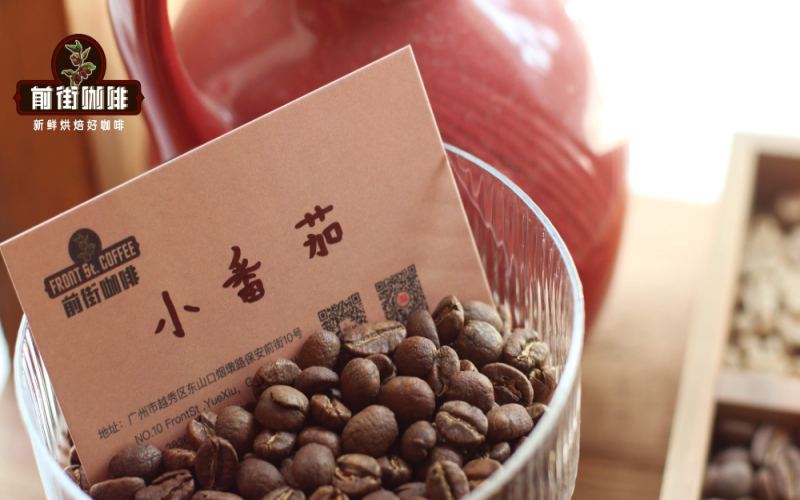
Kenya Nyeri Mahiga AA TOP Coffee Beans: A Detailed Look at Its Wild Flavors and K72 Washing Process
Want to understand the unique charm of Kenyan AA coffee? This article will take you deep into the Mahiga processing plant in the Nyeri region, revealing how the Othaya Farmers Cooperative Society it belongs to achieves top-tier coffee through strict quality control. From SL28 and SL34 varieties to the K72 double wash process, and on to the black plum, berry, and chocolate syrup flavors displayed in the cup, we offer a detailed analysis of this wildly distinctive Kenyan AA TOP-tier Mahiga. At the same time, Front Street Coffee’s Kenyan Cherry Tomato is a recommended product that lets you easily experience the wonderful taste of juicy texture interwoven with floral aromas. [more…]

Heytea's Part-Time Employee Meal Policy Sparks Controversy: No Meals for Shifts Under 6 Hours, Shift Scheduling Manipulation Common
Around the Spring Festival, a large number of university students flocked to tea and coffee shops for part-time work, but a rule at Heytea about mealtimes sparked confusion among employees: they are not allowed to eat unless they have worked a full 6 hours, and if they want to eat, they must either have half an hour deducted from their work hours or volunteer to work overtime. Multiple Heytea part-time employees reported encountering similar or even harsher requirements, and some stores were found to deliberately cap work hours and shorten shifts. In the food and beverage industry, mealtimes are peak hours, so it is normal for workers to be unable to eat on time, but employees question whether the rule is reasonable, believing that management, under the pretext of controlling labor efficiency, is cutting work hours and forcing workers to labor almost without rest while starving. [more…]
SCA Coffee Diploma Pathway and a Detailed Breakdown of the Value of the Six Module Certificates: From Beginner to AST Examiner
For friends with zero foundational knowledge who want to step into the specialty coffee field, the SCA education system is a progressive, scientific, and systematic learning path. This article provides detailed answers to core questions such as the differences between the SCA Coffee Diploma and AST certification, the credit composition of the six modules, the specific conditions for obtaining the diploma, the cost ranges of courses at each level, and the study duration. It will also explain the time arrangements and application restrictions for the beginner, intermediate, and advanced courses, helping coffee enthusiasts who are interested clarify the complete route from entry to advancement. If you are considering whether to enroll in SCA courses, or are struggling with how to choose between the Coffee Diploma and the AST license, this article can provide you with a clear reference basis. [more…]

From Viral Hit to Menu Staple: Why Dirty Coffee Continues to Thrive and Become a Specialty Café Standard
Since Dirty coffee rose to popularity in China around 2018, it has not faded away like other trendy drinks. Instead, it has firmly secured a permanent spot on the menus of major specialty coffee shops, standing on equal footing with the latte. There are over 200,000 related posts on Xiaohongshu, with each tag receiving more than 5 million views. This drink, originally created by Japanese barista Katsuyuki Tanaka, forms a layered effect by pouring hot espresso over cold milk. With its unique taste combining hot and cold and the enhancement of ice-distilled purified milk, it has driven the domestic coffee market to pursue higher ingredient quality. This article will analyze why Dirty coffee has become the "beloved darling" of local specialty coffee, from its origin and spread to its production characteristics and market impact. [more…]

Ethiopian Ambassador to China Sells Coffee via Livestream: 4 Tons of Coffee Beans Snapped Up in 5 Seconds
Ethiopian Ambassador to China Teshome Toga walked into Li Jiaqi's livestream and brought 4 tons of coffee beans roasted by the domestic brand Arada. As a result, they sold out in just 5 seconds to Chinese netizens, and the ambassador did not read a single word of the introduction script he had prepared. This is not the first time African coffee beans have been instantly snapped up in a livestream—in 2020, the 2,000 bags of coffee brought by the Rwandan ambassador also sold out in an instant. Behind these two livestreams are both the strong purchasing power of Chinese consumers and the warm power of public-interest support for farmers. This article will revisit the wonderful moments of these two livestreams and talk about what exactly makes African coffee beans so good. [more…]
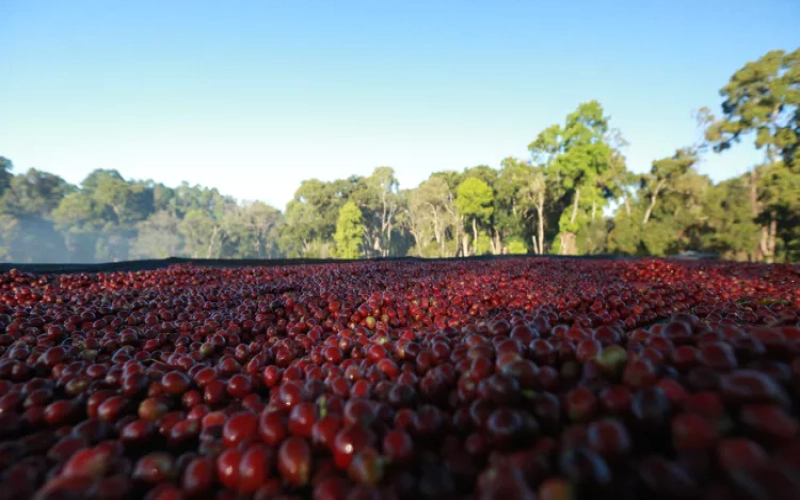
Ethiopian Natural Gutinguting Coffee Flavor Analysis: Yirgacheffe Region Characteristics and Pour-Over Brewing Key Points
Yirgacheffe, as one of Ethiopia's most representative coffee regions, is renowned worldwide for its washed beans with delicate floral aromas and citrus notes. Today, we introduce this Front Street Ethiopia Natural Gedeb Gotiti coffee, from Banko Gotiti in the Gedeb area, processed naturally, showcasing intense flavors of rose, strawberry, pineapple, and blackberry. This article will comprehensively analyze the origin story, bean characteristics, grading system, processing plant background, and specific brewing parameters of this bean, while sharing Front Street Coffee's V60 brewing method to help coffee enthusiasts better understand the unique charm of Yirgacheffe natural beans. [more…]